
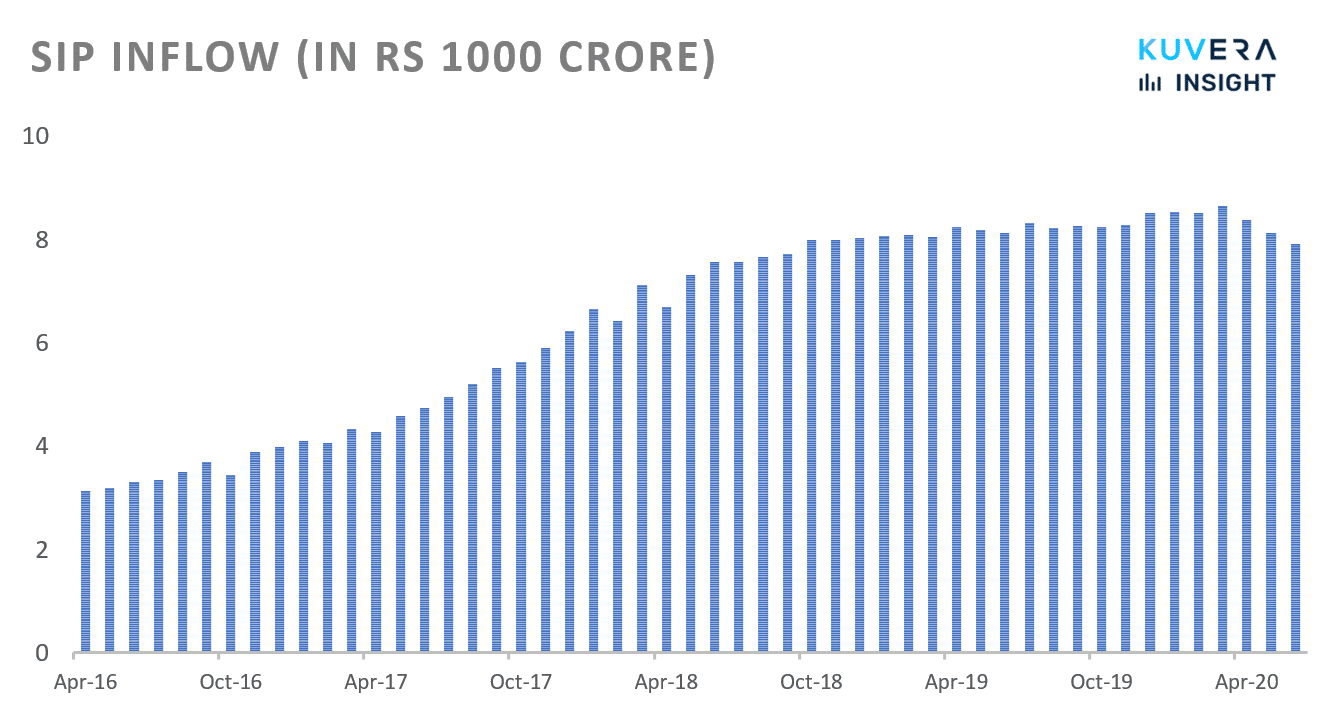

June 2025 SIP inflows touched ₹27,269 crore, a new high for monthly SIP money in India. That is bigger than May 2025’s ₹26,688 crore, but the more useful lesson is this: Indian investors are becoming more regular, not just more excited.
The record number looks impressive, but you should not treat it like a signal to rush into any fund. The better move is to understand what this flow says about investor habits, market mood, and your own 2026 SIP plan.
Why the June SIP inflow number matters more than a market headline
| Option | Key Number | Key Detail |
|---|---|---|
| June SIP inflows | ₹27,269 crore | Record SIP inflows in June |
| May SIP inflows | ₹26,688 crore | Previous month figure cited for comparison |
| SIP inflow rise | 2.2% | June SIP inflows rose from May |
| June net inflows | Rs 49,095 crore | Bulk came from hybrid funds and equity funds |
| Active SIP accounts | 8.64 crore | Active SIP accounts rising to this level |
| SIP stoppage | 74.5% | Reported alongside June 25 SIP flows |
The big June number is important because SIPs show regular retail participation. A lump sum inflow can jump due to one large investor or a short market mood, but SIP money usually comes from salaries, business income, and long-term saving plans.
In June 2025, mutual fund net inflows were reported around ₹49,095 crore, with strong support from equity and hybrid funds. This means money was not only coming through SIPs. Investors were also using mixed-asset products and equity schemes to stay invested.
Here is the key point many investors miss: a record SIP month does not mean the market is cheap. It means more people are trusting the process of monthly investing. That is a behaviour signal, not a buy-at-any-price signal.
If you are planning your fund list for the next year, you can compare categories and risk levels through guides like 9 Smart SIP Mutual Fund Choices for 2026: A Simple Investor’s Guide. The fund choice should match your goal, not the excitement around one month’s inflow data.
5 things June SIP inflows tell us about Indian investors
The June data gives a simple picture of how Indian households are using mutual funds. It also shows where investors must be careful.
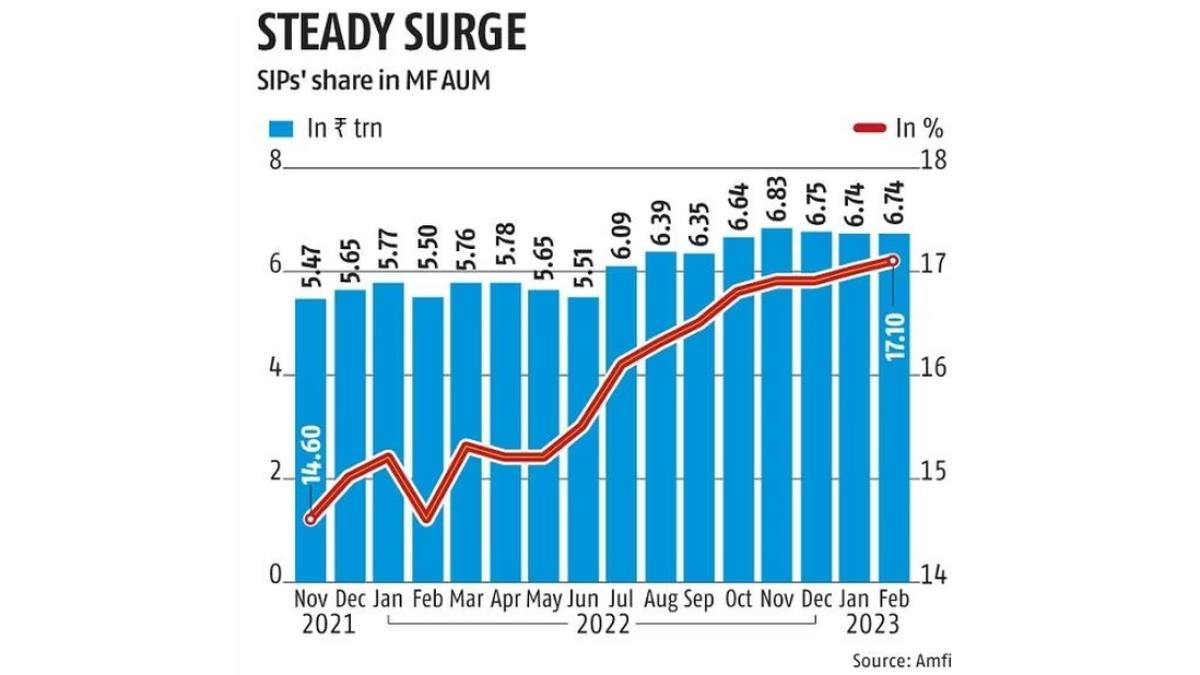
- SIP is becoming a salary habit: With active SIP accounts near 8.64 crore in June 2025, monthly investing is moving closer to a normal bill payment for many families.
- Retail investors are less scared of volatility: Markets may move up and down, but SIP inflows kept rising from May to June 2025.
- Hybrid funds are getting attention: June’s overall mutual fund inflows were helped by hybrid and equity funds, showing that investors want growth but also some balance.
- The average SIP is still practical: If ₹27,269 crore is spread across 8.64 crore active SIP accounts, the rough average is around ₹3,150 per account. This shows SIP investing is not only for rich investors.
- Records can hide weak behaviour: Some investors start SIPs during good markets and stop when returns fall. The real winner is the person who stays consistent for 5 to 10 years.
The hidden calculation: What ₹27,269 crore means for a normal SIP investor
Large market numbers feel far away from daily life. So let us bring the June SIP inflow down to a home budget level.
Suppose Riya invests ₹5,000 per month through SIP in an equity mutual fund for a 10-year goal. She should not worry whether June inflows were ₹27,269 crore or ₹25,000 crore. Her result will depend more on staying invested, increasing the SIP over time, and avoiding panic exits.
Now take Arjun, who starts with ₹3,000 per month and increases it by 10% every year. His first year investment is ₹36,000. In the second year, it becomes ₹39,600. This step-up habit can matter more than trying to find the “perfect” month to start.
This is the angle most headlines skip. Monthly SIP inflows in India show the crowd’s discipline, but your personal wealth comes from your own cash flow discipline.
There is also a job and income angle. Many fresh employees, especially those looking ahead to hiring cycles like 9 Smart Moves to Catch June 2026 Job Vacancies Before Seats Fill, should build investing habits early. A new salary should not only go to lifestyle upgrades. Even a small SIP started with the first job can create a strong base.

What most people get wrong about June SIP inflow data
Mistake 1: Thinking high inflow means guaranteed returns. SIP inflow data tells you how much money came into mutual funds. It does not promise that the market will rise next month.
Mistake 2: Waiting for the best month to start SIP. Many people ask, “Which month is best to start SIP?” The direct answer is: the best month is the month you have stable income and no high-interest debt. Waiting for January, June, or a market correction usually delays wealth creation.
Mistake 3: Copying the crowd without checking risk. If equity funds are getting strong inflows, that does not mean every investor should put all money into equity. A 25-year-old saving for retirement can take more equity risk than a 58-year-old saving for the next three years.
Mistake 4: Stopping SIP after a bad quarter. SIP works because it buys more units when markets fall and fewer units when markets rise. If you stop during a fall, you break the main benefit of SIP investing.
Mistake 5: Ignoring SIP stoppage and failed payments. Record inflows look good, but investors should also watch how many SIPs are stopped, paused, or rejected due to low bank balance. A clean SIP plan is one you can actually pay every month.
If you are unsure whether to continue your plan next year, use a simple decision guide like SIP 2026 Mein Continue Karein Ya Pause? Simple “Life + Market” Checklist. The decision should be based on goal, income, and fund performance over time, not one scary market fall.
How to read AMFI monthly SIP data without getting confused
AMFI monthly SIP data is useful, but it can confuse new investors. You will often see terms like SIP contribution, active SIP accounts, net inflows, folios, equity inflow, hybrid inflow, and redemption.
SIP contribution means the money collected through SIPs in that month. For June 2025, that number was ₹27,269 crore.
Active SIP accounts show how many SIP registrations are currently running. In June 2025, this was around 8.64 crore, showing wide participation.
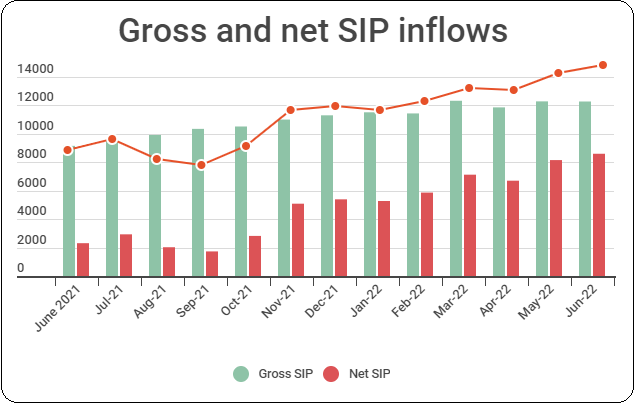
Net inflow is different. It means total money coming in after subtracting money going out. June 2025 mutual fund net inflows were reported near ₹49,095 crore. This includes more than SIPs.
Redemptions matter too. If many investors invest through SIPs but others sell large amounts, the net picture can change. That is why you should never look at only one number.
For 2026, investors searching for “SIP inflow January 2026” or “mutual fund inflow outflow data” should follow the same method. Look at SIP contribution, active accounts, redemptions, and category-wise flows together.
FAQ
What was the SIP inflow in June 2025?
June 2025 SIP inflows were reported at ₹27,269 crore. This was higher than May 2025’s ₹26,688 crore and marked a new high for monthly SIP contributions.
Where can I check AMFI monthly SIP data?
You can check AMFI’s official monthly mutual fund data releases. Look for SIP contribution, number of SIP accounts, mutual fund net inflows, equity flows, hybrid flows, and redemption data.
Which month is best to start SIP?
The best month to start SIP is the current month, if your emergency fund is ready and your income is steady. Do not wait for June, January, or a market fall. Time in the market is more useful than guessing the perfect entry date.
Does record SIP inflow mean the stock market will go up?
No. A record SIP inflow shows strong investor participation, but it does not guarantee short-term market returns. Use SIP for long-term goals, preferably five years or more for equity funds.
Should I increase my SIP after seeing June’s record inflow?
Increase your SIP if your salary or business income has grown and your monthly budget can handle it. A good rule is to raise your SIP by 5% to 10% every year, instead of making emotional changes after news headlines.
Final recommendation
Start or continue your SIP now, but do not chase the June record blindly. The ₹27,269 crore June 2025 inflow proves that Indian investors are building a strong monthly investing habit, and you should use that lesson in your own life. Keep 3 to 6 months of expenses as an emergency fund, choose funds based on your goal and risk level, step up your SIP when income grows, and stay invested through market ups and downs.

*Affiliate link — we may earn a small commission at no extra cost to you.
Career growth columnist with 7 years covering India's job market, salary benchmarks, and upskilling trends. Former HR consultant. His practical advice has been cited by Naukri.com and LinkedIn India.