

India’s AI market was valued at USD 9.51 billion in 2024 and is expected to cross USD 130 billion by 2032. Yet many freshers in 2026 may still accept the first salary offer because they fear HR will cancel it.
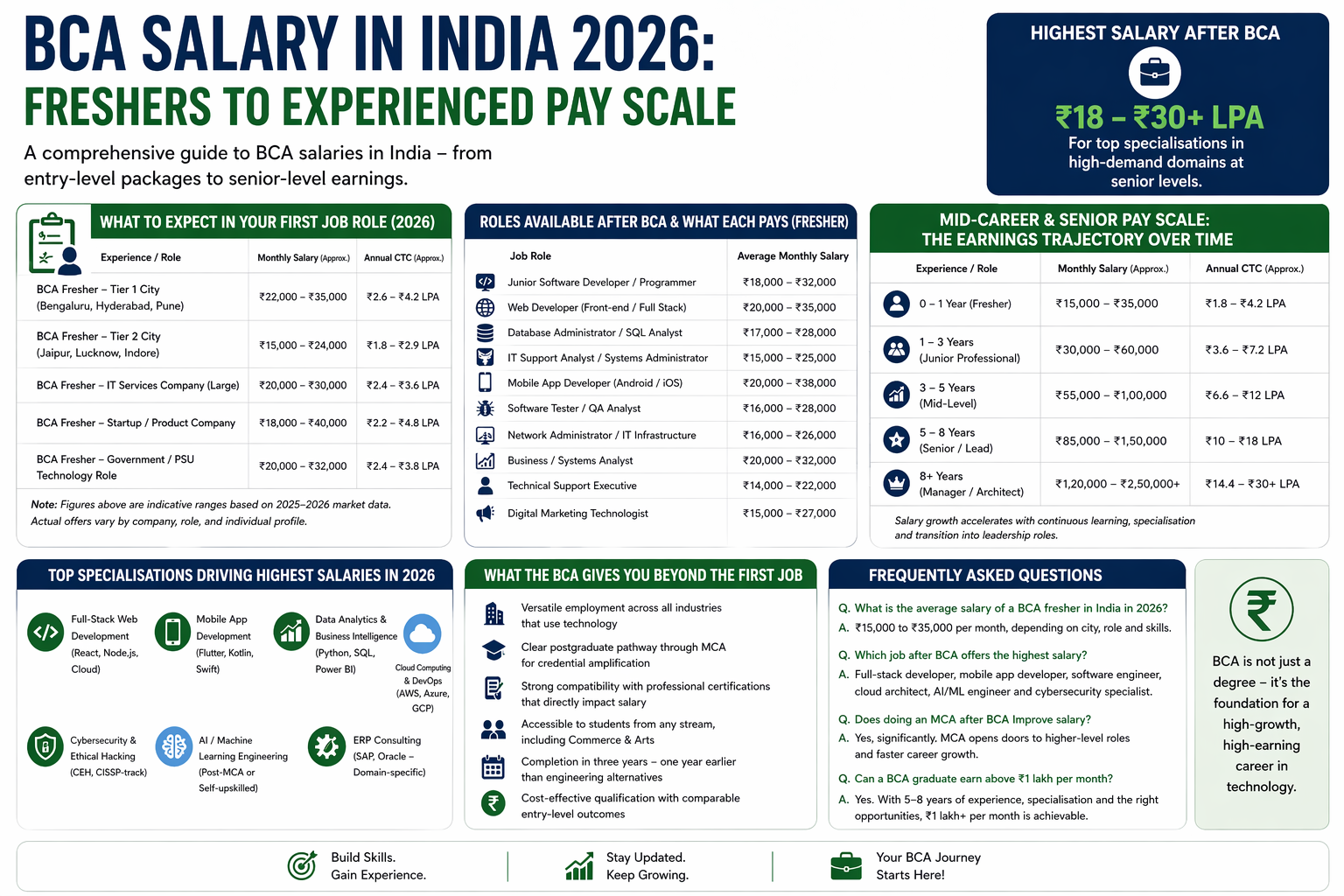
That fear is costly. For most entry-level jobs in India, a fresher can safely ask for 5% to 10% more than the first offer if they do it politely and with a clear reason.
Start With Take-Home Pay, Not Just CTC
The biggest salary mistake freshers make is looking only at the CTC. A ₹6 LPA CTC does not mean you will get ₹50,000 every month in your bank account.
CTC may include employer PF, gratuity, insurance, bonus, food card, variable pay, and sometimes training cost. Your actual monthly salary can be much lower than the number written in bold on the offer letter.
In 2026, your first question should not be “Can you increase the CTC?” Your first question should be: “Can you please share the fixed pay, variable pay, deductions, and estimated monthly in-hand salary?”

The 2026 Fresher Negotiation Checklist
Freshers do not need a dramatic negotiation script. You need a short, calm, and prepared discussion. HR teams expect questions, especially from candidates who understand the offer.
Before you ask for more money, check these points:
- Fixed salary: This is the most important part. A higher fixed amount is better than a large variable bonus that may not be paid fully.
- Variable pay: Ask if it is guaranteed, performance-linked, company-linked, or paid only after one year.
- Monthly in-hand pay: Ask for an estimate after PF, tax, professional tax, and other deductions.
- Bond or service agreement: Many freshers ignore this. A 2-year bond with a large penalty can reduce your freedom.
- Probation rules: Ask when salary review happens and whether notice period is different during probation.
- Location cost: A ₹5 LPA offer in Pune may feel different from ₹5 LPA in Bengaluru, Mumbai, or Gurugram.
If the salary feels low but the role is good, do not reject it at once. Ask if the company can improve one part of the offer, such as fixed pay, joining bonus, relocation support, or a 6-month review.
Real Salary Moves: What to Ask Based on the Offer
Let us use simple examples. These numbers are not fixed rules, but they show how a fresher can think in 2026.
Example 1: IT services offer of ₹3.6 LPA
If the role is in a lower-cost city or remote, you can ask for ₹3.9 LPA to ₹4 LPA. That is around 8% to 11% more. If HR says the fresher band is fixed, ask for a joining bonus of ₹20,000 to ₹30,000 or a written 6-month review.
Example 2: Product startup offer of ₹6 LPA with ₹1 LPA variable
Here, the real fixed salary is ₹5 LPA. You should ask if ₹50,000 from variable can be moved to fixed pay. This is better than asking only for a bigger CTC number.
Example 3: Data or AI fresher role at ₹8 LPA
Because AI hiring is growing, skilled freshers can negotiate more strongly if they have projects, internships, or a competing offer. India’s AI market growth from USD 9.51 billion in 2024 to a projected USD 130 billion-plus by 2032 shows why companies are paying attention to this skill area.
Example 4: Non-tech fresher offer of ₹4.2 LPA in Mumbai
Instead of only asking for ₹4.6 LPA, also ask about travel allowance, hybrid work, meal benefit, or relocation support. In a costly city, these benefits can protect your monthly budget.
A good rule for 2026 is simple: ask for 5% to 10% more if your profile is a normal match, and 10% to 15% more only if you have proof. Proof can mean a competing offer, strong internship, rare skill, great college project, or location disadvantage.
If you are comparing private jobs with public sector options, salary is not the only factor. Many students also track stability, pension-related benefits, and exam timelines through resources like 9 Smart Government Job Exams to Track in India 2026: Salary, Eligibility and Last Dates.
What Most People Get Wrong
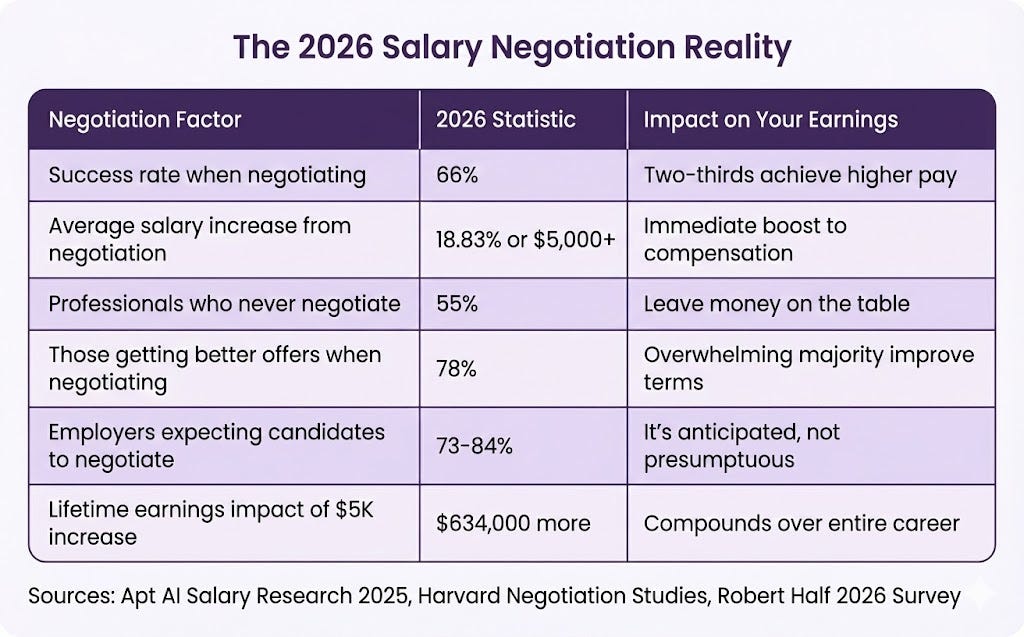
Myth 1: Freshers cannot negotiate.
Freshers can negotiate. What they cannot do is behave like they have 5 years of experience. Your tone should be polite, and your ask should be realistic.
Myth 2: HR will cancel the offer if you ask.
A professional company will not cancel an offer because you asked one sensible question. The risk comes when a candidate is rude, keeps changing numbers, or gives fake competing offers.
Myth 3: Higher CTC always means better offer.
A ₹7 LPA offer with high variable pay and strict bond may be worse than a ₹6.2 LPA offer with strong fixed pay, better training, and faster growth.
Myth 4: The first job is only about learning, so salary does not matter.
Learning matters, but your first salary becomes the base for your next appraisal or switch. Even a ₹30,000 monthly gap can affect savings, rent choices, loan plans, and family support.
Myth 5: You should quote the highest number you saw online.
Online salaries can be misleading. A fresher in Bengaluru with a niche AI internship and a fresher in a general support role in a Tier-2 city are not in the same salary band.
Also watch the wider salary mood. If you want to understand appraisal trends before accepting a low offer, read 7 Smart Ways to Use India’s 2026 Salary Hike Forecast Before Appraisal Season. It can help you ask whether the company has a fixed appraisal cycle and what hike range freshers usually get.
FAQ
Can a fresher negotiate salary in India in 2026?
Yes. A fresher can negotiate salary in India in 2026, especially after receiving an offer. The safest ask is usually 5% to 10% above the first offer, supported by skills, internship work, location cost, or another offer.
What should I say to HR while negotiating as a fresher?
Keep it short and respectful. You can say: “Thank you for the offer. I am excited about the role. Based on the role requirements, my internship experience, and the city cost, would it be possible to revise the fixed CTC to ₹X?”
What is the 70-30 rule in negotiation?
The 70-30 rule means you listen 70% of the time and speak 30% of the time. For freshers, this is useful because HR may reveal salary bands, joining timelines, benefits, or limits if you do not rush the conversation.
Should I negotiate during the interview or after the offer?
For most freshers, the best time is after the company shows strong interest or sends the offer. During early HR screening, share a range if asked, but do not fight over salary before the company has selected you.
Will the job market improve in India in 2026?
Some sectors are likely to be stronger than others. AI, data, cloud, cybersecurity, manufacturing, BFSI, and GCC roles may offer better chances for skilled freshers. But mass fresher hiring can still be selective, so negotiation works best when your resume has proof of skill.
Can I ask for benefits instead of salary?
Yes, and sometimes this works better. If the salary band is fixed, ask for a joining bonus, relocation help, certification support, hybrid work, early review, or better notice period terms.
Should I accept a lower salary if the company brand is strong?
Accept a slightly lower salary only if the role gives strong learning, real projects, good mentorship, and better future value. Do not accept a very low offer only for a brand name if your monthly survival becomes difficult.
Your best move in 2026 is to negotiate once, politely, with a clear number and a clear reason. Ask for 5% to 10% more, protect your fixed pay, read the bond terms, and compare the offer with city costs before saying yes. If you are planning rent, family support, or future EMIs, also look at money decisions early through guides like 7 Key Things to Know About Home Loan Interest Rates in India in May 2026. A fresher who negotiates with respect will not look greedy; they will look prepared.

*Affiliate link — we may earn a small commission at no extra cost to you.
Bilingual fintech writer covering credit cards, UPI, and personal finance for readers across India and Brazil. Holds a postgraduate degree in Economics. Believes financial literacy belongs to everyone, regardless of language.