

15% of your estimated yearly tax can be due before you have even finished the first quarter of the financial year. For FY 2025-26, the first advance tax date moved from 15 June 2025 to 16 June 2025 because 15 June was a Sunday. That one-day shift is useful, but it is not a reason to wait until the last hour.
The June installment is small on paper, but it can create real trouble if you guess your income badly, use the wrong assessment year, or forget income like rent, interest, freelance work, or capital gains.
Why the June installment matters more than people think
| Option | Key Number | Key Detail |
|---|---|---|
| Q1 FY 2026-27 advance tax | 15% | 1st installment due in June 2026 |
| FY 2025-26 advance tax deadline | June 16, 2025 | Deadline shifted from June 15, 2025 |
| Example total tax liability | ₹63,544 | Total tax liability mentioned |
| First advance tax installment | ₹9,532 | 15% × ₹63,544, due by 15 June 2025 |
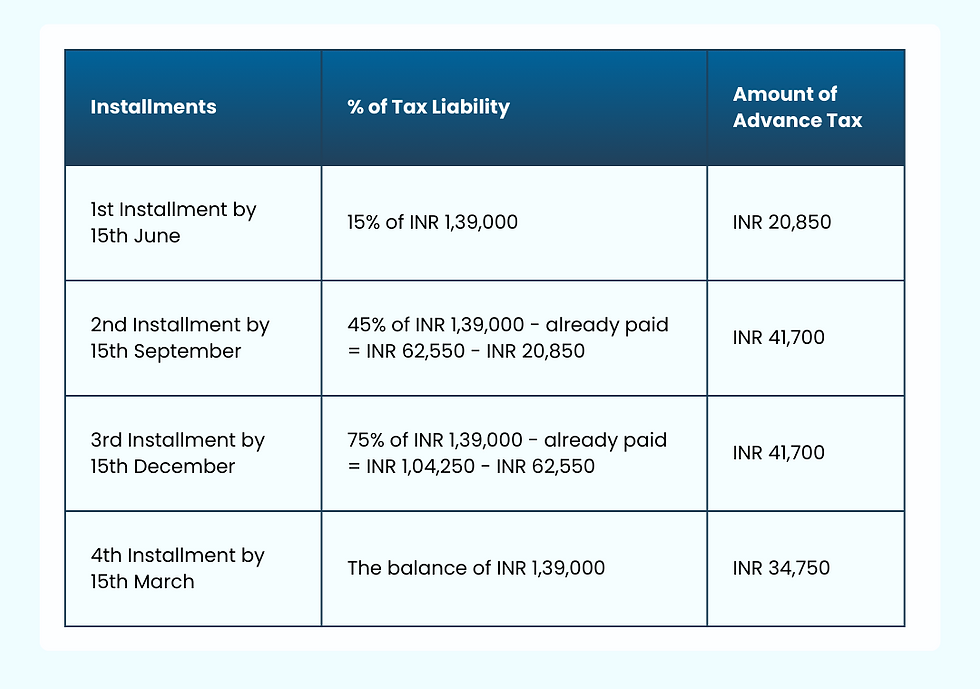
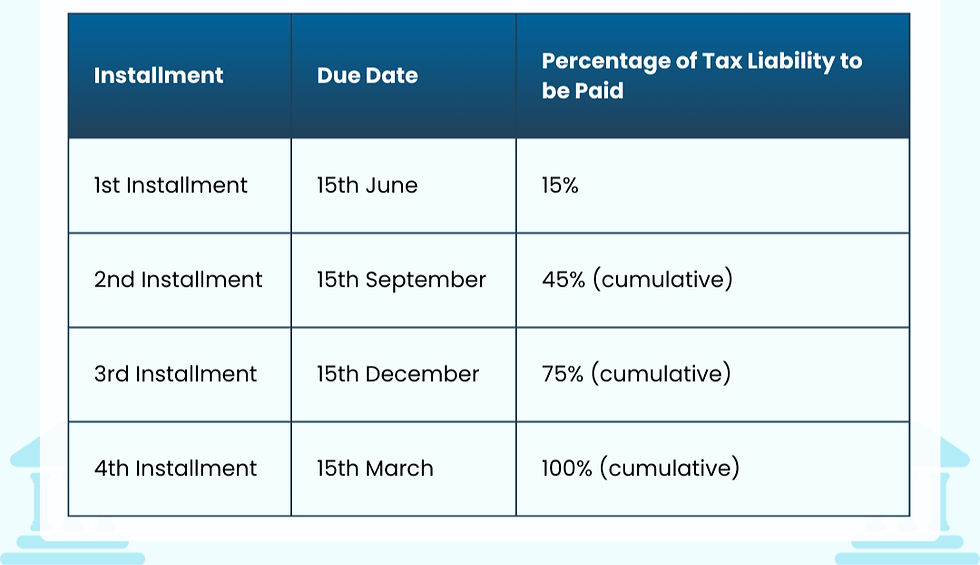
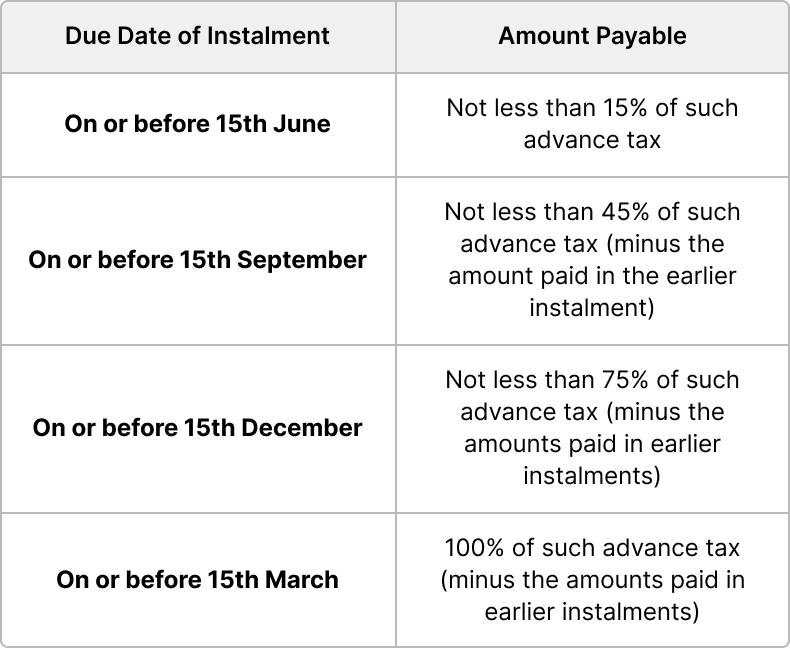
| Advance tax installment schedule | 15%, 45%, 75%, 100% | Of net tax liability on or before respective due dates |
Many taxpayers treat the June advance tax installment as optional because the financial year has just started. That is a mistake. The tax department expects you to pay tax as you earn income, not only when you file your return later.
If your total tax payable for the year, after reducing TDS or TCS, is ₹10,000 or more, advance tax usually applies. This can affect salaried people with side income, freelancers, consultants, landlords, business owners, investors, and retirees earning taxable interest.
The regular advance tax schedule is simple: pay 15% by June, 45% by September, 75% by December, and 100% by March. The June payment is the first signal that your tax planning is on track. If you ignore it, you may later face interest under sections like 234B and 234C.
One more point is important for 2026 planning. For income earned in FY 2026-27, the first advance tax installment falls in June 2026, and the related assessment year will generally be AY 2027-28. Picking the wrong year while paying online is one of the most common errors.
9 checks before you pay the June advance tax installment
Do not pay a random round figure just to “show compliance.” A better method is to make a simple estimate, pay the correct amount, and keep proof safely.
- Estimate your full-year income: Include salary, business income, professional fees, rent, interest, dividends, capital gains already known, and other taxable income.
- Choose your tax regime early: Your advance tax estimate changes if you use the old regime deductions or the new regime slabs. If you are unsure, review 9 Smart Checks Before Choosing Old or New Tax Regime for ITR Filing 2026.
- Reduce TDS and TCS: Advance tax is calculated on the net tax still payable after taxes already deducted or collected.
- Apply the 15% June rule: For regular taxpayers, pay 15% of your estimated yearly tax by the June due date.
- Check if you are under presumptive taxation: Many eligible presumptive taxpayers under sections such as 44AD or 44ADA pay advance tax in one installment by March, not in the normal June schedule.
- Use the correct assessment year: For FY 2025-26, use AY 2026-27. For FY 2026-27, use AY 2027-28.
- Do not wait for Form 16: Form 16 comes later. The June installment is based on your own estimate.
- Save the challan receipt: Keep the BSR code, challan number, date, and amount. You may need it while filing ITR.
- Recheck after major income changes: If you sell shares, property, or receive a large bonus after June, update your September or December payment.
If you are also tracking return deadlines, keep an eye on Income Tax Return Filing Last Date 2026: 9 Must-Know Checks Before You File. Advance tax and ITR filing are separate tasks, but both depend on the same income estimate.
June installment examples with real numbers
Let us use simple numbers to see how much advance tax should be paid in June.
Example 1: Salaried person with side income
Riya has salary income where her employer deducts TDS. She also earns rent and bank interest. Her estimated total tax for the year is ₹1,20,000. Her employer is expected to deduct ₹90,000 as TDS.
Her net tax payable is ₹30,000. Since this is more than ₹10,000, advance tax applies. Her June installment will be 15% of ₹30,000 = ₹4,500.
Example 2: Freelancer with uneven income
Aman is a consultant. He expects yearly tax of ₹2,40,000 after reducing TDS. By June, he has earned only a small amount, but he already has signed contracts for the rest of the year.
He should still plan based on his estimated full-year tax. His June installment is ₹36,000, which is 15% of ₹2,40,000. If his income later drops, he can adjust the next installments.
Example 3: Investor with capital gains after June
Meera did not have any large taxable income in April, May, or June. In August, she sells listed shares and earns taxable capital gains. She did not need to guess this in June if the gain was not known then.
But after the gain happens, she should include it in the next advance tax installment. This is a practical point many articles miss: capital gains that arise after June can be paid in later installments, if you could not estimate them earlier.
Example 4: Senior citizen with no business income
A resident senior citizen who does not have income from business or profession is generally not required to pay advance tax. For example, if a 68-year-old earns pension and bank interest only, and tax is handled through TDS or final return payment, the June advance tax rule may not apply.
This exception is important because many retired people panic when they hear about the June date. Still, they should check Form 26AS, AIS, and bank interest because missing TDS can lead to tax payable later.
What most people get wrong
Myth 1: “Only business owners pay advance tax.” This is false. Salaried people can also have to pay if they earn income outside salary, such as rent, interest, dividends, trading income, or freelance fees.
Myth 2: “I can wait until I file ITR.” You can pay self-assessment tax later, but that does not remove advance tax interest. If advance tax applies and you skip installments, interest can be added.
Myth 3: “The June amount must be exact.” The June installment is based on a reasonable estimate. You are not expected to know every future rupee, but you should not ignore income you can already predict.
Myth 4: “My employer deducts TDS, so I am safe.” This is true only if your employer’s TDS covers your full tax. If you have other income and do not declare it to your employer, you may still owe advance tax.
Myth 5: “The new tax regime means no advance tax.” The regime changes your tax amount, not the rule of paying during the year. If your net tax payable is ₹10,000 or more, advance tax can still apply.
Before you decide your regime, compare deductions, exemptions, and slab benefits carefully. A simple check through 7 Smart Ways to Choose Between Old and New Tax Regime in 2026 can help you avoid paying too much or too little advance tax.
FAQ on the June advance tax installment
How much advance tax should be paid in June?
For regular taxpayers, the June installment is usually 15% of the estimated total tax liability for the year, after reducing expected TDS and TCS. If your net yearly tax payable is below ₹10,000, advance tax may not apply.
What is the due date for the first advance tax installment?
The usual due date is 15 June of the financial year. For FY 2025-26, the date shifted to 16 June 2025 because 15 June was a Sunday. Always check if the due date is changed due to a bank holiday or official update.
Can I pay advance tax online?
Yes. You can pay online through the income tax e-payment system using net banking, debit card, or other allowed modes. After payment, download and save the challan receipt because you will need the details when filing your income tax return.
Do freelancers have to pay the June installment?
Yes, freelancers and professionals usually need to pay if their estimated tax after TDS is ₹10,000 or more. However, if they use an eligible presumptive taxation scheme, their advance tax schedule may be different, often with payment by March.
What if I earn capital gains after June?
If the capital gain happens after the June installment and you could not estimate it earlier, include it in the next advance tax payment. Do not wait until ITR filing if the gain creates a clear tax liability.
Final recommendation
Treat the June advance tax installment as a tax planning checkpoint, not a last-minute payment task. Estimate your full-year income, subtract expected TDS, pay 15% if advance tax applies, and keep your challan safe. My clear recommendation is to pay a sensible June amount early, then revise your September and December installments as your real income becomes clearer.

*Affiliate link — we may earn a small commission at no extra cost to you.
Bilingual fintech writer covering credit cards, UPI, and personal finance for readers across India and Brazil. Holds a postgraduate degree in Economics. Believes financial literacy belongs to everyone, regardless of language.